Commercial Generator Size Calculator
Calculate the right generator size for your commercial facility by entering your equipment details below.
Facility Information
HVAC Equipment
Motors and Machinery
General Loads
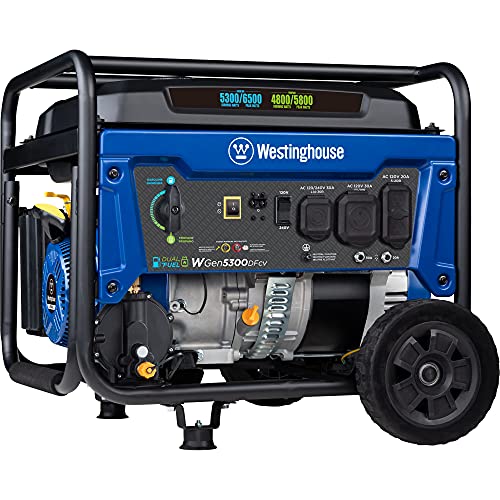
List of the Top 10 Best Generators:




Commercial Generator Sizing Guide: A Complete Professional Reference
Sizing a commercial generator is fundamentally different from sizing a residential unit. Commercial facilities combine diverse load types—HVAC systems, three-phase motors, elevators, data center equipment, and critical life-safety circuits—each with distinct starting characteristics, power factors, and redundancy requirements. An undersized commercial generator can trip on motor startup, damage sensitive equipment, or fail to carry critical loads during an outage. An oversized unit wastes capital and runs inefficiently at light loads. This comprehensive guide, drawing on commercial electrical design practice and code principles, walks you through load analysis, voltage and phase considerations, power factor, redundancy, and installation requirements. Use the Commercial Generator Size Calculator above as your starting point, and pair it with the detailed guidance below for a reliable, code-compliant design.
Common Commercial Generator Sizes and Applications
Commercial generators span a wide range of capacities. The table below provides typical size ranges by application, but actual sizing must always be based on a detailed load calculation.
| Application | Typical Size Range | Common Uses |
|---|---|---|
| Small Commercial | 20-50 kW | Small offices, retail stores |
| Medium Commercial | 50-150 kW | Restaurants, medical offices |
| Large Commercial | 150-500 kW | Large retail, warehouses |
| Industrial | 500-2000 kW | Manufacturing, data centers |
For facilities with predominantly three-phase loads, our Three Phase Generator Size Calculator provides a dedicated workflow. For diesel-powered installations, see the Diesel Generator Size Calculator, and for backup-critical operations, the Emergency Generator Size Calculator and Standby Generator Size Calculator are valuable companions.
Common Equipment Power Requirements
The following table summarizes typical running kW and starting kVA for common commercial equipment. These values are approximate and vary by manufacturer, age, and efficiency; always use nameplate data for final design. Note that starting kVA can be several times running kW for motor-driven loads—this surge is often the governing factor in generator sizing.
| Equipment | Running kW | Starting kVA |
|---|---|---|
| Air Handler (20 HP) | 15 | 45 |
| Chiller (100 Ton) | 110 | 330 |
| Motor (25 HP) | 18.7 | 56 |
| Air Compressor | 15 | 45 |
| Elevator | 20 | 60 |
When converting motor horsepower to kW or kVA, use our HP to kW Calculator, kW to HP Calculator, HP to kVA Calculator, and kVA to HP Calculator. For HVAC equipment rated in BTU/hr, the BTU to kW Calculator and kW to BTU Calculator bridge thermal and electrical ratings.
Important Sizing Considerations
1. Load Analysis and Load Types
A commercial load analysis must categorize every load by its behavior during startup and steady-state operation:
- Critical loads requiring immediate backup: Life-safety systems, fire pumps, emergency lighting, security systems, and data center infrastructure must be prioritized and often placed on separate transfer switches or UPS systems. For data center loads, power quality and ride-through requirements are especially demanding.
- Motor starting requirements: Motors draw locked-rotor current (typically 6–8 times full-load amps) for a brief period. The generator must absorb the largest starting surge while simultaneously carrying all running loads. Techniques such as reduced-voltage starters, soft starters, or VFDs can reduce the required generator size.
- Power factor correction: Inductive loads lower the facility power factor, increasing the kVA required from the generator. Capacitor banks or synchronous condensers can correct power factor and reduce generator size.
- Future expansion needs: Design with spare capacity (typically 20–25%) to accommodate future equipment without replacing the generator. Document the design margin for future planners.
2. Voltage Requirements and Phase Configuration
Voltage and phase determine the generator's output configuration and the associated switchgear and distribution design:
- 208V three-phase is common in light commercial buildings such as offices and retail spaces, often serving smaller HVAC units and general loads.
- 480V three-phase is standard in industrial and large commercial facilities, offering lower current for the same power and reducing conductor and switchgear costs.
- Power quality requirements: Sensitive electronics, medical equipment, and data centers may require low harmonic distortion and tight voltage regulation—features of generator sets with permanent magnet excitation or inverter-based systems.
- Voltage drop considerations: Long cable runs between the generator and the transfer switch or distribution panel can cause voltage drop during motor starting, potentially causing contactor dropout. Proper cable sizing and generator voltage regulation are essential.
For current-to-power conversions that account for voltage and power factor, use the Amps to kW Calculator and kW to Amps Calculator, or the Generator Size Calculator by Amps for amperage-driven sizing.
3. Installation Requirements and Site Conditions
Installation factors often constrain generator selection as much as electrical load:
- Local codes and permits: Commercial generator installations are governed by the NEC (Article 700, 701, 702 for emergency, legally required, and optional standby systems), NFPA 110 for emergency power systems, and local building and fire codes. Permits and inspections are mandatory.
- Noise restrictions: Commercial installations are subject to local noise ordinances. Sound-attenuated enclosures or remote siting may be required. Inverter or low-speed generator sets can reduce noise.
- Fuel availability and storage: Diesel, natural gas, and propane are common. Natural gas eliminates on-site fuel storage but may have capacity limits; diesel requires fuel storage and periodic testing. Dual-fuel options provide flexibility. For fuel planning, see the Generator Fuel Consumption Calculator and Propane Generator Runtime Calculator.
- Environmental conditions: Altitude and ambient temperature derate generator output. High altitudes reduce engine power (approximately 3.5% per 1,000 ft above 3,000 ft), and high temperatures reduce both engine and alternator capacity. Confirm derating factors with the manufacturer.
4. Redundancy and Reliability
For critical operations, redundancy configurations such as N+1 (one spare generator) or 2N (fully duplicated systems) ensure continuous operation during maintenance or failure. Redundancy also requires automatic transfer switches, paralleling gear, and control systems that coordinate multiple generators. The Generator Sizing Charts provide quick-reference capacity tables for combined load planning, and the Generator Runtime Calculator helps estimate fuel endurance for extended outages.
Understanding kW, kVA, and Power Factor
Commercial generator sizing requires fluency in both real power (kW) and apparent power (kVA):
- kW (real power): The power that performs useful work—drives motors, lights, and electronics. Generator prime ratings are often expressed in kW.
- kVA (apparent power): The total power supplied, including reactive power. Generators are limited by their alternator's kVA rating because current heats the windings. The relationship is kW = kVA × Power Factor.
- Power factor: Commercial facilities typically aim for 0.8 or higher. A low power factor means the generator must supply more kVA to deliver the same kW, effectively requiring a larger unit. Power factor correction can reduce required generator size and improve efficiency. Use the kW to kVA Calculator and kVA to kW Calculator for these conversions.
For energy consumption and billing analysis, the kWh to kW Calculator, kW to kWh Calculator, W to kWh Calculator, and kWh to W Calculator are useful. For battery-backed systems, see the kW to mAh Calculator and mAh to kW Calculator.
Step-by-Step Commercial Sizing Workflow
A rigorous sizing workflow reduces risk and supports documentation for permits and inspections:
- Step 1—Inventory all loads: List every load by type, running kW, starting kVA, quantity, and whether it is critical or non-critical.
- Step 2—Sum running loads: Total the running kW and convert to kVA using the facility power factor.
- Step 3—Identify the largest starting surge: Determine the maximum starting kVA and add it to the sum of all other running loads. This is often the governing size constraint.
- Step 4—Apply a safety margin: Add 20–25% capacity for future loads and derating. Verify that the generator can carry the load at the site's altitude and temperature.
- Step 5—Select the generator and verify: Choose a standard generator size at or above the calculated requirement, and confirm voltage, phase, fuel type, and enclosure match the site.
- Step 6—Coordinate with switchgear and protection: Size transfer switches, overcurrent protection, and grounding per code. For three-phase distribution, see the Three Phase Generator Size Calculator.
For related motor and power conversions during this workflow, see the Amps to HP Calculator and HP to Amps Calculator. For large-scale power, the Megawatt to Kilowatt Calculator and Kilowatt to Megawatt Calculator are useful references.
Frequently Asked Questions (Expert Answers)
What's the difference between kW and kVA?
kW represents real power—the actual work performed by the load. kVA represents apparent power—the total power supplied by the generator, including reactive power that does no useful work. The relationship depends on power factor: kW = kVA × Power Factor. Generators are typically rated in both, and the alternator's kVA limit often governs selection because current heats the windings. Our kW to kVA Calculator and kVA to kW Calculator make these conversions straightforward.
Why is power factor important?
Power factor affects the actual power available from a generator. A low power factor means you need a larger generator to supply the same usable power, because the alternator must deliver more current for the same kW. Commercial facilities typically aim for a power factor of 0.8 or higher, and power factor correction capacitors can reduce required generator size while lowering utility penalties. For a deeper explanation, see our Amps to kW Calculator page, which covers power factor in detail.
Should I consider redundancy?
For critical operations—hospitals, data centers, financial institutions, and manufacturing lines—redundancy configurations like N+1 or 2N should be considered. This ensures continuous operation during maintenance or generator failure, but adds cost and complexity. Redundancy planning should include automatic transfer switches, paralleling controls, and fuel storage sufficient for extended outages. The Standby Generator Size Calculator and Emergency Generator Size Calculator provide sizing guidance for these scenarios.
How do I size a generator for motor starting?
Motor starting is often the governing constraint. Identify the largest motor's starting kVA (typically 6–8 times running kVA), add it to the sum of all other running loads, and verify the generator can absorb that surge while maintaining voltage within acceptable limits. Reduced-voltage starters, soft starters, and VFDs can significantly reduce required generator size. Use our HP to kVA Calculator for motor conversions and the Commercial Generator Size Calculator above to combine loads.
What fuel type is best for commercial generators?
Diesel is common for reliability and fuel efficiency but requires on-site storage and testing. Natural gas eliminates fuel storage but may have capacity limits and pressure requirements. Propane offers long shelf life and clean burning. Dual-fuel options provide flexibility. Fuel choice affects runtime, maintenance, and code compliance. For runtime and fuel estimates, see the Generator Fuel Consumption Calculator and Propane Generator Runtime Calculator.
How does altitude affect commercial generator sizing?
At higher altitudes, reduced air density lowers engine power—approximately 3.5% per 1,000 ft above 3,000 ft. High ambient temperatures also reduce engine and alternator capacity. Apply derating factors to the nameplate rating and verify with the manufacturer. For a broader discussion of derating and sizing, see the Generator Sizing Charts and the Generator Size Calculator.
Where can I find related conversion and sizing tools?
GeneratorCalculator.net offers a comprehensive suite, including the Portable Generator Size Calculator, RV Generator Size Calculator, Whole House Generator Sizing Calculator, Solar Generator Size Calculator, and Portable Power Station Size Calculator. For electrical conversions, explore the Generator Size Calculator by Amps, Amps to HP Calculator, and BTU to kW Calculator.
By following a disciplined load analysis, accounting for motor starting surges, verifying power factor and voltage requirements, and planning for redundancy and environmental derating, you can select a commercial generator that delivers reliable power at the lowest total cost. Always validate final sizing with a licensed electrical engineer and confirm compliance with local codes and NFPA 110 where applicable.