Portable Generator Size Calculator
Enter the wattage of each appliance you want to power with your portable generator.
List of the Top 10 Best Portable Generators:


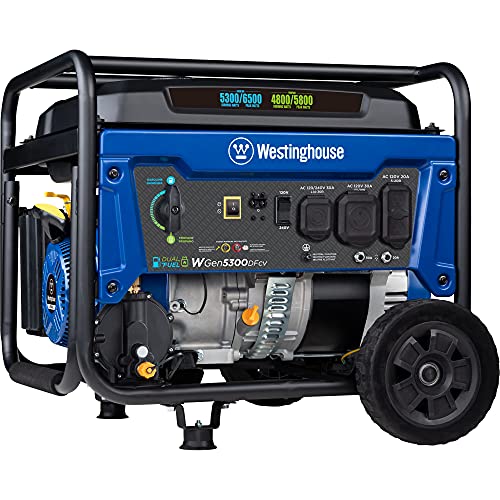


How to Calculate Portable Generator Size Requirements: A Complete Professional Guide
Choosing the right portable generator is a balancing act between power, portability, fuel efficiency, noise, and cost. Choose too small and the generator will trip breakers, fail to start motor-driven tools, or be damaged by sustained overload. Choose too large and you pay more upfront, haul extra weight, burn more fuel, and may never use the capacity. The key is an accurate load calculation that distinguishes running watts from starting watts, accounts for which appliances run simultaneously, and applies a sensible safety margin. This comprehensive guide, built from practical field experience with portable generators on job sites, campsites, and in emergency backup, explains how to find appliance wattage, how to interpret typical scenarios, the portability-versus-power trade-off, runtime and fuel planning, noise considerations, and the safety rules that are non-negotiable. Use the Portable Generator Size Calculator above for instant results, and pair it with the detailed guidance below for a confident purchase.
Finding Appliance Wattage
Accurately determining the wattage needs for your portable generator is essential. The best data source is always the appliance itself. Here's how to find it:
- Check the nameplate or label:
- Look for watts (W) or volt-amperes (VA). For resistive loads, W and VA are effectively the same; for motor loads, VA may be higher due to power factor.
- Check for a starting or surge watts figure, often listed separately for motor-driven appliances.
- If only amps are shown, calculate watts:
- 120 V appliances: Watts = Amps × 120
- 240 V appliances: Watts = Amps × 240
- If only horsepower is given (common for pumps and compressors), one HP ≈ 746 W of mechanical output, but the electrical input is higher—allow roughly 1,000 W per HP for small single-phase motors. For precise conversions, see our HP to kW Calculator and HP to Amps Calculator.
- Use a plug-in power meter: For appliances already in use, an inexpensive energy monitor gives actual measured watts, which is more accurate than nameplate ratings—especially for electronics and cycling loads.
- Distinguish running from starting watts: Motor-driven appliances draw several times their running wattage at startup. This surge, not the running load, often determines the generator size required.
Common Portable Usage Scenarios
The table below summarizes typical needs by scenario. These are planning starting points; always calculate your own specific loads.
| Usage Type | Typical Needs | Recommended Size |
|---|---|---|
| Camping/RV | Lights, Phone Chargers, Small Appliances | 2,000-4,000 watts |
| Tailgating | TV, Cooling Fan, Small Cooker | 2,000-3,500 watts |
| Job Site | Power Tools, Work Lights | 4,000-7,500 watts |
| Emergency Home Backup | Essential Appliances | 5,000-10,000 watts |
For scenario-specific sizing, see our RV Generator Size Calculator and Emergency Generator Size Calculator. For whole-home installations where a portable unit is not sufficient, the Whole House Generator Sizing Calculator and Standby Generator Size Calculator provide dedicated workflows.
Common Equipment Wattages
These representative figures help you build a load list quickly. Values vary by model and efficiency; verify against nameplates where possible.
| Equipment | Running Watts | Starting Watts |
|---|---|---|
| Electric Grill | 1,500-1,800 | 1,800 |
| RV Air Conditioner | 1,400-2,400 | 2,800-4,800 |
| Mini Refrigerator | 300-400 | 600-800 |
| Circular Saw | 1,200-1,500 | 3,000-4,500 |
| Air Compressor (1 HP) | 1,500 | 4,500 |
| Work Light LED | 100-150 | 150 |
For a broader appliance reference including household equipment, see our Generator Size Calculator and Generator Sizing Charts. For motor-specific conversions, the Amps to HP Calculator and HP to Amps Calculator are useful.
How the Sizing Calculation Works
Portable generator sizing follows a consistent method:
- List every appliance you intend to power, with its running watts and starting watts.
- Sum the running watts of all appliances that will run simultaneously.
- Identify the largest starting-watt surge among your appliances—do not sum all starting watts, because motors rarely start simultaneously. The governing figure is total running watts plus the single largest starting surge.
- Add a safety margin of 10–25% for future additions, derating at altitude or high temperature, and efficiency loss over time.
- Compare to generator ratings: portable generators publish both running watts and peak (starting) watts. Confirm that your total running load fits within the running rating, and that your calculated surge fits within the peak rating.
For fuel and runtime planning once a size is chosen, see our Generator Runtime Calculator and Generator Fuel Consumption Calculator. For propane-fueled portables, the Propane Generator Runtime Calculator provides runtime estimates.
Important Considerations for Portable Generators
1. Portability vs. Power
Consider the trade-off between power output and portability:
- Larger generators offer more power but are harder to move—small units weigh 40–60 lbs, while 7,500 W units exceed 200 lbs.
- Inverter generators are quieter and produce cleaner power but typically offer less output per dollar.
- Weight ranges from about 40 lbs for a 2,000 W inverter to well over 250 lbs for conventional 10,000 W units.
- Consider wheel kits and lifting points for larger units, and plan storage and transport accordingly.
2. Runtime and Fuel Efficiency
Fuel consumption varies directly with load:
- Higher loads consume more fuel—a 2,000 W unit at half load may run 8–12 hours on one gallon, while a 7,500 W unit at half load may manage only 4–6 hours.
- Eco or auto-idle modes can substantially extend runtime at light loads by lowering engine RPM.
- Consider fuel tank size and refueling logistics, particularly for multi-day outages.
- Plan safe fuel storage and rotation; gasoline degrades in 3–6 months without stabilizer.
3. Noise Considerations
Different environments have different noise requirements, and local ordinances may apply:
- Camping: Look for quiet operation (50–60 dB at 23 feet)—inverter generators are the practical choice. Many campgrounds have explicit noise limits.
- Job Site: Can tolerate louder operation (70–80 dB), but hearing protection for operators is still advisable.
- Residential Use: Consider neighbor impact and local noise ordinances; sound-attenuated models or careful siting reduce complaints.
4. Safety: Carbon Monoxide and Electrical Hazards
Portable generator safety is not optional. Carbon monoxide (CO) poisoning from generators is a leading cause of accidental deaths during outages:
- Never operate a generator indoors, in a garage, in a basement, or near open windows or doors—at least 20 feet from buildings is the standard recommendation.
- Install battery-operated CO alarms in the home, even when the generator is operated outdoors.
- Use properly rated outdoor extension cords, and never backfeed a household circuit through a wall outlet—use a transfer switch installed by a licensed electrician.
- Keep the generator dry and protected from rain; do not operate in wet conditions without an approved cover.
- Allow the generator to cool before refueling, and store fuel in approved containers away from ignition sources.
Related Conversion and Sizing Tools
Portable generator planning often involves conversions between watts, amps, volts, and kilowatts. These calculators cover the most common needs:
- Amps to kW Calculator and kW to Amps Calculator
- kW to kVA Calculator and kVA to kW Calculator
- HP to kW Calculator and kW to HP Calculator
- HP to kVA Calculator and kVA to HP Calculator
- Amps to HP Calculator and HP to Amps Calculator
- BTU to kW Calculator and kW to BTU Calculator
- kW to kWh Calculator and kWh to kW Calculator
- W to kWh Calculator and kWh to W Calculator
- kW to mAh Calculator and mAh to kW Calculator
- Megawatt to Kilowatt Calculator and Kilowatt to Megawatt Calculator
For larger or specialized applications, see the Commercial Generator Size Calculator, Three Phase Generator Size Calculator, Diesel Generator Size Calculator, Generator Size Calculator by Amps, Solar Generator Size Calculator, and Portable Power Station Size Calculator.
Frequently Asked Questions (Expert Answers)
What size portable generator do I need for camping?
For camping, a 2,000–4,000 watt portable generator is typically sufficient. This size handles basic needs like lights, phone charging, small appliances, and even a small RV air conditioner. Inverter generators are recommended for camping due to quiet operation and clean power output, which is important for electronics and campsite courtesy. Compare with our RV Generator Size Calculator if you are powering an RV.
Can I run power tools with a portable generator?
Yes, but pay attention to both running and starting watts. Most portable generators in the 4,000–7,500 watt range handle common power tools. Tools with motors need 2–3 times their running watts to start, so a circular saw drawing 1,500 running watts may need 4,500 starting watts. Confirm that your calculated surge—total running watts plus the largest starting surge—fits within the generator's peak rating.
How do I determine the right size for emergency home backup?
For emergency home backup, list your essential appliances—refrigerator, freezer, furnace blower, lights, a few outlets, and perhaps a well pump—and add up their wattages. Most homes can manage essential loads with a 5,000–7,500 watt portable generator. Note that central air conditioning typically exceeds portable generator capacity; window units or portable ACs are the practical choice for portable backup. For whole-home coverage, see the Whole House Generator Sizing Calculator.
What's the difference between running watts and starting watts?
Running watts is the continuous power needed to keep an appliance running. Starting watts (or surge watts) is the extra power needed to start motor-driven appliances, typically 2–3 times running watts. Your generator must handle the total running load plus the largest single starting surge. The generator's peak (surge) rating covers this brief demand, while its running rating must cover the continuous load.
Should I choose an inverter generator or conventional portable generator?
Inverter generators are better for sensitive electronics and camping due to clean power output and quiet operation, but they cost more and offer less power per dollar. Conventional generators offer more power at lower cost but are louder and produce less stable power that may damage sensitive electronics. If you need to power both electronics and heavy tools, consider an inverter with sufficient capacity or add a UPS for the sensitive loads. For battery-based alternatives, see the Portable Power Station Size Calculator.
How does altitude affect portable generator performance?
At higher altitudes, reduced air density lowers engine power—roughly 3.5% per 1,000 feet above 3,000 feet—and increases fuel consumption for the same load. Plan to size up if you will frequently operate at altitude. Temperature also matters: very hot conditions reduce both engine and alternator capacity. Manufacturer derating tables provide the precise correction factors.
Where can I find related generator sizing tools?
GeneratorCalculator.net offers a full suite, including the Standby Generator Size Calculator, Diesel Generator Size Calculator, Generator Runtime Calculator, Generator Fuel Consumption Calculator, and Generator Sizing Charts.