Portable Power Station Size Calculator
Calculate the required size of a portable power station based on your power needs. Enter your device usage and backup duration to find the perfect power station for camping, travel, or emergencies.
List of the Best Portable Power Station:


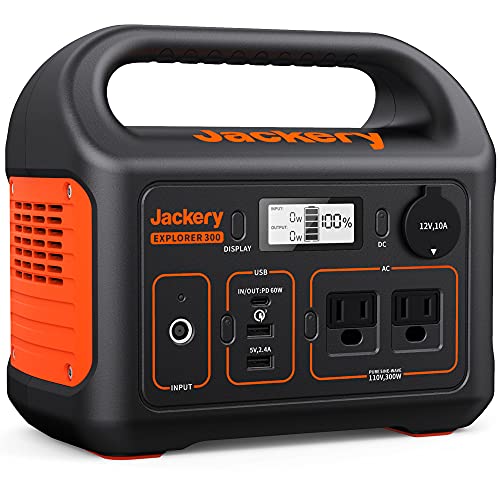
Understanding Portable Power Station Sizing: A Complete Professional Guide
Portable power stations—battery-based power supplies with built-in inverters and outlets—have become essential equipment for camping, travel, job sites, and emergency backup. Unlike fuel generators, they produce no exhaust, run silently, and deliver clean power safe for electronics. But choosing the right size is more nuanced than picking the largest capacity you can afford: an undersized station will run out of energy mid-use, while an oversized one adds cost, weight, and bulk you may never need. Sizing depends on device wattage, daily usage hours, the number of backup days, and the round-trip efficiency of charging and discharging. This comprehensive guide, built from practical experience with battery-based backup systems, explains the sizing formula, the key factors, worked examples, application scenarios, battery chemistry and performance considerations, and the safety and practical tips that make the difference between a useful tool and a frustrating one. Use the Portable Power Station Size Calculator above for instant results, and pair it with the detailed guidance below for a confident purchase.
Key Factors in Sizing a Portable Power Station
When determining the size of a portable power station, consider the following factors:
- Device Wattage (W): The power consumption of each device, measured in watts. Nameplate ratings overstate cycling loads; a plug-in energy monitor gives actual measured values.
- Usage Duration: The number of hours per day you intend to run the devices. For cycling loads like refrigerators, use the effective duty cycle rather than continuous operation.
- Backup Duration: The number of days you need backup power without recharging—one day for a camping trip, two to three days for an outage, longer for off-grid living.
- Charging Efficiency: The round-trip efficiency of the battery and inverter system, typically around 85–90%. Inverter losses alone are often 5–10%, and battery round-trip losses add another 5–10%.
- Peak Power: The station's inverter must also handle the surge draw of motor-driven devices—a blender or pump may draw several times its running wattage at startup.
For related conversions between watts, kilowatts, and battery capacity, see our kW to mAh Calculator and mAh to kW Calculator. For energy-versus-power fundamentals, see kW to kWh Calculator and kWh to kW Calculator.
The Portable Power Station Sizing Formula
To calculate the required capacity of a portable power station, use the following formula:
- Total Energy Needed (Wh) = Device Wattage × Usage Hours × Backup Days ÷ Charging Efficiency
The division by efficiency is essential: it ensures you account for energy lost during charging and discharging, so the station you buy can actually deliver the energy your devices need. Skipping this step is the most common sizing error, producing a station that runs out 10–20% earlier than expected. For additional margin—particularly for cold-weather use, battery aging, or unexpected loads—apply a further 10–20% on top of the calculated figure. For battery-specific conversions, see the kW to mAh Calculator.
Worked Example Calculation
Let's calculate the size of a portable power station for the following scenario:
- Device Wattage: 50 W (e.g., a laptop)
- Usage Hours: 5 hours per day
- Backup Duration: 2 days
- Charging Efficiency: 85%
Using the formula:
- Total Energy Needed = (50 × 5 × 2) ÷ 0.85 = 588 Wh
In this case, a portable power station with a capacity of at least 600 Wh would be recommended. If the same station also needed to run a 45 W mini-fridge cycling at 40% duty (10.8 W effective) for the same two days, the additional energy would be (10.8 × 24 × 2) ÷ 0.85 ≈ 610 Wh—nearly doubling the requirement. This shows why listing every intended device, with realistic duty cycles, matters more than rounding up a single appliance's rating. For motor-driven devices, also verify the station's continuous and peak wattage output. For generator-based alternatives, see the Portable Generator Size Calculator.
Common Applications of Portable Power Stations
Portable power stations are used in a variety of scenarios, each with unique power requirements:
| Application | Typical Devices | Recommended Capacity | Notes |
|---|---|---|---|
| Camping | Lights, small fans, phone chargers | 300-500 Wh | Lightweight and portable options preferred |
| Travel | Laptops, cameras, drones | 500-700 Wh | Compact designs with AC and USB ports |
| Emergency Backup | Fridge, medical devices, lights | 1000-1500 Wh | Higher capacity for extended outages |
| Off-Grid Living | Appliances, power tools | 2000+ Wh | Paired with solar panels for recharging |
For camping and travel, the practical constraint is often weight rather than capacity—a 500 Wh station typically weighs 12–18 lbs, while a 1,500 Wh unit may exceed 40 lbs. For emergency backup, check whether your critical devices (CPAP, medical refrigeration) have specific runtime requirements; see the Emergency Generator Size Calculator for backup planning context. For off-grid use, pair the station with solar panels; the Solar Generator Size Calculator helps size the array.
Factors Affecting Power Station Performance
The performance of a portable power station can vary based on several factors:
- Battery Chemistry: Lithium-ion (NMC) batteries offer high energy density and are common in portable stations; lithium iron phosphate (LFP/LiFePO4) offers longer cycle life and better thermal stability, making it increasingly popular for larger units. LFP typically provides 3,000–5,000 cycles versus 500–1,000 for NMC.
- Inverter Efficiency: Converting DC battery power to AC for standard outlets loses 5–10%. Pure sine wave inverters are essential for sensitive electronics; modified sine wave units can damage or cause malfunction in some devices.
- Operating Conditions: Extreme heat or cold can significantly reduce usable battery capacity—lithium batteries may lose 20–30% of capacity in freezing conditions, and charging below 0°C (32°F) can damage LFP cells.
- Depth of Discharge and BMS: The battery management system protects cells by limiting discharge and charge rates; some stations allow full discharge, while others reserve capacity to extend battery life. Usable capacity may be 85–95% of nameplate.
- Self-Discharge and Standby Drain: Idle stations lose a small percentage of charge per month; the inverter and display also draw standby power when on. Turn the unit off when not in use for long-term storage.
For related electrical conversions, see the Amps to kW Calculator, kW to Amps Calculator, kW to kVA Calculator, and kVA to kW Calculator. For runtime and energy relationships, see W to kWh Calculator and kWh to W Calculator.
Portable Power Station vs. Portable Generator
Understanding when a battery station is the right choice—and when a fuel generator is better—prevents disappointment:
- Portable power stations are silent, produce no exhaust, require no fuel, and deliver clean power. They are ideal for indoor use, camping, electronics, and short outages. Their limitation is total energy—recharging takes hours and requires grid or solar input.
- Portable generators can run indefinitely as long as fuel is available, making them preferable for multi-day outages and high-power loads like space heaters, large AC units, and power tools. Their limitations are noise, exhaust, and fuel storage. See the Portable Generator Size Calculator and Generator Runtime Calculator.
- Hybrid approach: Many households pair a small generator (to recharge the station and run heavy loads) with a power station (to run electronics and bridge the gap during generator refueling). See the Whole House Generator Sizing Calculator for backup system planning.
Related Conversion and Sizing Tools
These calculators cover the most common conversions used alongside portable power station sizing:
- kW to mAh Calculator and mAh to kW Calculator
- kW to kWh Calculator and kWh to kW Calculator
- W to kWh Calculator and kWh to W Calculator
- Amps to kW Calculator and kW to Amps Calculator
- kW to kVA Calculator and kVA to kW Calculator
- HP to kW Calculator and kW to HP Calculator
- BTU to kW Calculator and kW to BTU Calculator
- Megawatt to Kilowatt Calculator and Kilowatt to Megawatt Calculator
For generator sizing across applications, see the Generator Size Calculator, RV Generator Size Calculator, Standby Generator Size Calculator, Commercial Generator Size Calculator, Three Phase Generator Size Calculator, Diesel Generator Size Calculator, Generator Size Calculator by Amps, and Generator Sizing Charts. For fuel planning, see Generator Fuel Consumption Calculator and Propane Generator Runtime Calculator.
Frequently Asked Questions (Expert Answers)
Can I charge a portable power station while using it?
Yes, most power stations support pass-through charging, allowing you to recharge the battery while powering devices. However, pass-through charging can generate extra heat and may reduce battery life if used continuously; check the manufacturer's guidance. It is especially useful during extended outages when a generator or solar panel is available to recharge the station. See the Solar Generator Size Calculator for solar recharge planning.
What is the lifespan of a portable power station?
The lifespan depends on the battery chemistry and usage. Lithium-ion (NMC) batteries typically last 500–1,000 charge cycles to 80% capacity, while LFP batteries often deliver 3,000–5,000 cycles. Calendar aging also matters—batteries degrade over time even when unused, especially at high temperatures or full charge. Store at moderate charge (40–60%) and moderate temperatures for longest life.
Can I use solar panels to recharge my power station?
Yes, many portable power stations have solar input ports (often MC4 or DC barrel connectors) and can be paired with compatible panels for off-grid recharging. Match the panel voltage and current to the station's input specifications—exceeding the maximum input voltage can damage the unit. Realistic solar recharge takes 4–8 hours in good sun, and weather, panel angle, and shading all reduce output. For related sizing, see the Solar Generator Size Calculator.
How do I account for device start-up surges?
Battery capacity (Wh) determines runtime, but the station's inverter wattage determines what it can power at any moment. Motor-driven devices—blenders, pumps, mini-fridges, and power tools—can draw two to three times their running wattage at startup. Check the station's continuous and peak output ratings, and ensure both cover your largest device. For motor conversions, see the HP to Amps Calculator and Amps to HP Calculator.
Why does my station run out faster than the calculation suggests?
Several factors reduce real-world runtime: inverter and battery losses (accounted for by the efficiency input, but often worse than expected at low loads), cold temperatures, battery aging, standby drain from displays and connectivity, and devices that draw more than their nameplate rating. Use measured device wattage where possible, add a 10–20% margin, and re-test the station's actual runtime with your load before relying on it in an emergency.
Can a portable power station run a refrigerator?
A large station (1,000 Wh or more) can typically run a modern refrigerator for 8–16 hours, depending on the fridge's efficiency and ambient temperature. Because compressors cycle, effective draw is often 30–50 W average rather than the 100–200 W nameplate figure. Verify the station's inverter can handle the compressor's startup surge, and consider a station with pass-through charging so it can be replenished during longer outages.
Where can I find related generator sizing tools?
GeneratorCalculator.net offers a full suite, including the Portable Generator Size Calculator, Emergency Generator Size Calculator, Solar Generator Size Calculator, Generator Runtime Calculator, and Generator Fuel Consumption Calculator.
By understanding the portable power station sizing formula, accounting for efficiency and duty cycles, and recognizing the difference between battery capacity and instantaneous power, you can choose a station that meets your needs without excess weight or cost. Always verify critical designs against manufacturer specifications and consult qualified professionals for medical or life-safety applications.