Whole House Generator Sizing Calculator
Enter the wattage of each appliance you want to power with your generator.
List of the Top 10 Best Generators for Whole House:


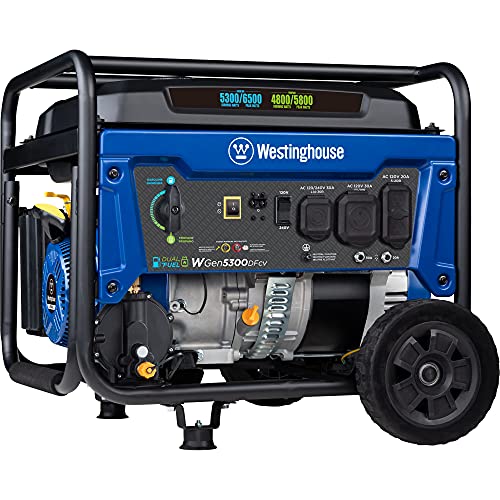


How to Find and Calculate Appliance Wattage for Whole House Generator Sizing: A Complete Guide
Sizing a whole-house generator is one of the highest-stakes electrical decisions a homeowner can make. The unit, installation, transfer switch, and fuel connection together cost $8,000–$20,000 or more, the equipment should last 15–20 years, and it must carry every load in the home—or a carefully chosen subset—during outages that may last days. Get it wrong in one direction and breakers trip when someone runs the dryer while the AC is on; get it wrong in the other and you pay for capacity you never use while the generator runs inefficiently at light load. The foundation of correct sizing is an accurate appliance wattage inventory that distinguishes running from starting watts and realistically accounts for which loads operate simultaneously. This comprehensive guide, drawn from residential standby and portable generator sizing experience, explains how to find appliance wattage, provides typical wattage tables across kitchen, HVAC, and laundry categories, covers the critical concepts of starting watts, simultaneous usage, and safety margins, and answers the questions homeowners ask most often. Use the Whole House Generator Sizing Calculator above for instant results, and pair it with the detailed guidance below for a properly sized system.
Finding Appliance Wattage
When sizing a generator for your home, accurately determining the wattage of your appliances is crucial. Here are the main ways to find appliance wattage:
- Check the Nameplate/Label:
- Located on the back or bottom of appliances, and on motor housings for HVAC equipment
- Look for watts (W) or volt-amperes (VA)—for resistive loads these are equivalent; for motor loads, VA may be higher due to power factor
- If you see amps and volts, multiply them (Watts = Volts × Amps)
- For 120V appliances: Watts = Amps × 120
- For 240V appliances: Watts = Amps × 240
- Consult Documentation:
- Owner's manual or user guide
- Manufacturer's website and product specification sheets
- Energy Guide labels, which also show estimated annual kWh consumption
- Use Online Resources:
- Manufacturer databases and energy consumption calculators
- Department of Energy guidelines and appliance efficiency databases
- Professional electrician resources; see the Generator Sizing Charts for quick-reference tables
- Measure Actual Consumption:
- A plug-in power meter provides real measurements for 120V appliances, which is more accurate than nameplate ratings—especially for cycling loads and electronics.
- For 240V appliances, a whole-panel energy monitor or clamp meter gives usable figures.
- Convert power to energy to verify daily consumption: see our W to kWh Calculator and kWh to W Calculator.
Common Household Appliance Wattages
Here are typical wattage ranges for common household appliances. Note that actual wattage may vary by model, age, and efficiency; verify against nameplates where possible.
Kitchen Appliances
| Appliance | Wattage Range |
|---|---|
| Refrigerator | 500-750 watts |
| Freezer | 500-750 watts |
| Microwave | 600-1,200 watts |
| Electric Oven | 2,000-5,000 watts |
| Electric Stove (per burner) | 1,500-2,500 watts |
| Dishwasher | 1,200-2,400 watts |
| Coffee Maker | 600-1,200 watts |
| Toaster | 800-1,400 watts |
HVAC and Water
| Appliance | Wattage Range |
|---|---|
| Central Air Conditioner | 2,000-4,000 watts |
| Window AC Unit | 500-1,500 watts |
| Electric Water Heater | 3,000-4,500 watts |
| Electric Furnace | 5,000-25,000 watts |
| Furnace Fan | 700-1,000 watts |
| Well Pump | 1,000-2,000 watts |
| Sump Pump | 800-1,100 watts |
Laundry and Cleaning
| Appliance | Wattage Range |
|---|---|
| Washing Machine | 500-1,000 watts |
| Electric Clothes Dryer | 3,000-4,000 watts |
| Vacuum Cleaner | 200-700 watts |
| Iron | 1,000-1,800 watts |
For conversions between watts, amps, and kW as you build the load list, see our Amps to kW Calculator, kW to Amps Calculator, HP to Amps Calculator, and HP to kW Calculator. For apparent power considerations, see kW to kVA Calculator and kVA to kW Calculator.
Important Considerations When Calculating Wattage
1. Starting vs. Running Wattage
Many appliances require more power to start than to run continuously. This is particularly true for appliances with motors, and the starting surge often governs generator size:
- Refrigerators may need 2-3 times their running wattage to start
- Air conditioners often require 3-4 times their running wattage, and a 3-ton central unit may surge to 10,000 W or more
- Well pumps can need 3 times their running wattage
- Always account for the highest possible power draw: total running watts plus the single largest starting surge, not the sum of all starting watts
- Soft-start kits for AC compressors can dramatically reduce the required surge and therefore the generator size
2. Simultaneous Usage
Consider which appliances might run simultaneously:
- Essential appliances that must run together—refrigerator, freezer, furnace fan, and well pump are common minimums
- Peak usage times during the day, such as mornings when HVAC, water heating, and cooking coincide
- Seasonal variations in power needs, especially summer cooling versus winter heating
- Emergency scenarios and priorities: which loads would you shed first to keep the essentials running?
- Load management modules can shed large loads automatically, allowing a smaller generator to serve a larger panel
3. Safety Margins
Include safety margins in your calculations:
- Add 20% to total calculated load as a standard practice
- Account for future additions—a hot tub, EV charger, or second AC
- Consider voltage fluctuations and derating at altitude or high temperature
- Plan for unexpected power needs during extended outages
Whole-House vs. Essential-Circuit Sizing
A critical decision precedes the wattage calculation: will the generator carry the entire home, or only selected essential circuits?
- Whole-house sizing provides seamless coverage—no one has to remember which circuits are live—but requires a larger generator, typically 20–30 kW for homes with central AC and electric appliances, and 36 kW or more for large homes with multiple AC units. See the Standby Generator Size Calculator for size-to-home-size guidance.
- Essential-circuit sizing is more economical and often sufficient when paired with load management. A 14–16 kW unit commonly serves essential circuits in a 2,500 sq ft home.
- Critical-load-only backup—life safety, medical equipment, and refrigeration—may be served by a smaller unit or by battery systems; see the Emergency Generator Size Calculator and Portable Power Station Size Calculator.
- Portable generator options can cover essential loads at lower cost; see the Portable Generator Size Calculator.
Professional Verification
While these guidelines help estimate power requirements, consider:
- Consulting a licensed electrician for accurate assessment and a formal load calculation
- Obtaining professional load calculations that account for code-required demand factors
- Verifying local electrical codes and permit requirements, including NEC Articles 700, 701, and 702
- Checking manufacturer recommendations for derating, fuel supply, and clearances
For commercial-scale installations, see the Commercial Generator Size Calculator; for three-phase residential systems, the Three Phase Generator Size Calculator is useful.
Additional Tips for Accurate Sizing
- Create a Load List:
- List all appliances you want to power, with running and starting watts for each
- Prioritize essential versus non-essential items
- Consider seasonal variations in which loads operate
- Monitor Current Usage:
- Use a power meter to measure actual consumption for existing appliances
- Track usage patterns over time and note peak periods
- Consider energy efficiency upgrades before finalizing generator size—efficient appliances can reduce required capacity by 10–20%
- Plan for Future Needs:
- Anticipate additional appliances and home additions
- Account for aging equipment that may draw more power as it deteriorates
- Plan for changing power needs, such as a future EV charger
- Plan Fuel and Runtime:
- Natural gas supplies indefinitely but may fail in regional disasters; propane requires tank sizing. See the Propane Generator Runtime Calculator and Generator Runtime Calculator.
- Estimate consumption and cost with the Generator Fuel Consumption Calculator.
- For diesel units, see the Diesel Generator Size Calculator.
Frequently Asked Questions About Whole House Generator Sizing
What size generator do I need to run my whole house?
The size needed depends on your specific power requirements. Most homes require between 5,000 to 20,000 watts. A typical household with basic appliances (refrigerator, lights, TV, microwave) might need 7,500 watts, while homes with central air conditioning, electric water heater, and other high-draw appliances might need 15,000-20,000 watts or more. Homes with multiple AC units, electric ranges, and EV chargers may exceed 30 kW. Always calculate your specific needs based on the appliances you plan to power; the calculator above does this automatically.
How do I know if I'm calculating the wattage correctly?
Proper wattage calculation involves adding up the power requirements of all appliances you plan to run simultaneously. For accuracy, check each appliance's nameplate for wattage ratings, multiply volts by amps if wattage isn't directly listed, and add a 20% safety margin to your total. Remember to add only the largest starting surge to the running total rather than summing all starting watts. When in doubt, consult with a licensed electrician for verification.
Why do I need to add a safety margin to my calculations?
A safety margin (typically 20%) is crucial because it accounts for startup power surges, voltage fluctuations, future additions to your power needs, and the fact that generators shouldn't regularly operate at maximum capacity. This buffer helps ensure reliable operation and extends the generator's lifespan. Note that excessive oversizing has its own penalties—light-load operation wastes fuel and can cause wet stacking in diesel engines.
Should I be concerned about starting watts versus running watts?
Yes, starting watts are crucial in generator sizing. Many appliances, especially those with motors (like refrigerators, air conditioners, and pumps), require significantly more power to start than to run. For example, while a refrigerator might run on 700 watts, it could need 2,100 watts to start. Your generator must handle these temporary power surges. The governing figure is total running watts plus the largest single starting surge; soft-start kits can reduce AC surge substantially.
Can I run my central air conditioner on a portable generator?
Running central air conditioning typically requires a larger generator due to high starting watts. Most central AC units need 3,500-5,000 running watts and up to 15,000 starting watts. For this reason, central AC usually requires a whole-house standby generator rather than a portable unit, unless you have a very large portable generator—or a soft-start kit, which can reduce the surge substantially. Window AC units are the practical choice for portable generator backup; see the Portable Generator Size Calculator.
How does generator sizing differ for natural gas versus propane generators?
While the basic sizing principles remain the same, fuel type can affect generator output. Natural gas generators typically produce about 10% less power than when running on propane or gasoline due to lower energy density. When sizing a natural gas generator, add an additional 10% to your calculated power needs to compensate for this difference. Note also that natural gas supply may fail during regional disasters, while propane storage provides independence. For runtime estimates, see the Propane Generator Runtime Calculator.
What happens if I undersize my generator?
An undersized generator can lead to several problems: frequent circuit breaker trips, inability to start high-draw appliances, potential damage to sensitive electronics due to voltage fluctuations, reduced generator lifespan from constant strain, and possible generator failure. It's always better to have slightly more capacity than you need rather than too little—but balance this against the efficiency penalty of excessive oversizing.
Do I need different sizing for summer versus winter?
Seasonal power needs can vary significantly. Summer might require more power for air conditioning and fans, while winter might need more for heating systems and space heaters. Calculate your needs for both seasons and size your generator based on whichever season has the higher power requirement. In all-electric homes with heat pumps, winter loads often dominate; in homes with gas heat, summer cooling usually governs.
How do energy-efficient appliances affect generator sizing?
Energy-efficient appliances can significantly reduce your generator size requirements. Modern Energy Star appliances often use 10-50% less electricity than standard models. If you're planning to upgrade your appliances, consider energy-efficient models to reduce your overall generator size needs and fuel consumption. Use the W to kWh Calculator to quantify savings for specific appliances.
Should I consider a transfer switch when sizing my generator?
Yes, a transfer switch is crucial for safely connecting a generator to your home's electrical system. When sizing your generator, factor in the capacity of your transfer switch. Most residential transfer switches are rated for 100 to 200 amps. Ensure your generator's output matches your transfer switch specifications for safe and effective operation, and consider load management modules if you plan to serve a large panel with a smaller generator.
What about sensitive electronics and generator power?
Modern electronics require clean, stable power. When sizing a generator, consider investing in one with features like inverter technology or automatic voltage regulation if you plan to power sensitive electronics. These features help protect your devices from power fluctuations but may require a slightly larger generator size. Battery-based systems offer an alternative for electronics; see the Solar Generator Size Calculator and Portable Power Station Size Calculator.
How do local codes affect generator sizing?
Local electrical codes and regulations can impact generator sizing requirements. Some jurisdictions have specific requirements for residential generator installations, including minimum sizing for certain applications. Always check local building codes, obtain necessary permits, and verify NFPA 110 requirements for emergency systems before installing a generator system.